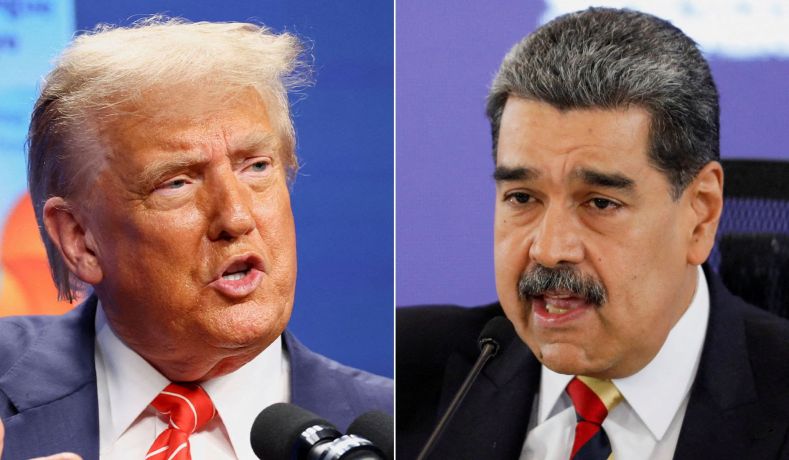
When people hear that the United States has “sanctioned” a country like Venezuela, the assumption is often that it’s a diplomatic slap on the wrist—or something close to war. The reality is more complex, more powerful, and far more consequential for ordinary businesses and individuals.
At the same time, rhetoric around “regime change” or dramatic hypotheticals—such as invading a sovereign country or abducting its president—raises serious legal questions. What is actually lawful? What crosses the line? And who decides?
This article breaks it down plainly.
What Does It Mean to Sanction a Country?
Sanctions are legal and economic restrictions, not acts of war. They are imposed under domestic US law and enforced primarily by the US Treasury Department through the Office of Foreign Assets Control (OFAC).
The goal is to apply pressure—economic, political, or psychological—without deploying troops.
Common Types of Sanctions
Sanctions can include one or more of the following:
- Prohibitions on trade with certain sectors (oil, arms, technology)
- Freezing assets of a foreign government or named individuals held in the US
- Bans on financial transactions, especially involving US banks or the US dollar
- Blacklisting individuals or companies (placing them on the OFAC SDN list)
- Restrictions on imports and exports
These measures are precise on paper, but sweeping in practice.
How Sanctions Affect Private Business
A key misconception is that sanctions only affect governments. In reality, they bind private actors, especially those connected to the United States.
Who Must Comply?
Sanctions apply to:
- US citizens and residents
- US companies (including overseas subsidiaries)
- Anyone using the US financial system
- Any transaction involving US dollars or US banks
In effect, sanctions follow the money.
A US Trader Doing Business With a Venezuelan Company
Even if both parties are private and willing, sanctions can make the transaction illegal or impossible.
Here’s how:
- The Trade May Be Prohibited
- The Venezuelan company might be:
- State-owned
- Linked to a sanctioned individual
- Operating in a sanctioned sector (e.g. oil)
- The Venezuelan company might be:
- Payments Can’t Be Processed
- US banks will block the transaction
- Dollar payments won’t clear
- Correspondent banks refuse to touch the deal
- Secondary Sanctions Create Fear
- Even non-US banks and companies risk punishment for facilitating sanctioned trade
- This isolates the target country further
- Severe Penalties
- Violations can result in:
- Massive fines
- Criminal charges
- Prison sentences
- Loss of access to US markets
- Violations can result in:
Bottom line:
Even “private” trade becomes legally radioactive once sanctions are in place.
An Important Nuance
US sanctions are not global law.
A Chinese, Russian, or Turkish company is not automatically violating international law by trading with Venezuela. However, if:
- US dollars are used
- US banks are involved
- US technology or components are used
…the US claims jurisdiction.
This is why sanctions work so effectively: they weaponise the dollar and the global banking system.
Could a US President Invade a Country and Abduct Its President?
This question moves us from economics into constitutional and international law.
The short answer: it would be profoundly unlawful, with extremely narrow exceptions.
US Constitutional Law
The US Constitution is clear:
- Only Congress can declare war
- The President is Commander-in-Chief, not a unilateral war-maker
What Presidents Can Do Without Congress
Under the War Powers Resolution (1973), a president may:
- Deploy forces temporarily
- Conduct limited or defensive military actions
But even then:
- Congress must be notified within 48 hours
- Forces must be withdrawn within 60–90 days unless Congress authorises continued action
An invasion of a sovereign country to abduct its head of state would far exceed these limits.
It would amount to:
- An act of war
- A violation of the separation of powers
- A constitutional overreach
International Law
Such an action would also violate core principles of international law, including:
- The UN Charter
- Prohibits the use of force against a sovereign state
- State Sovereignty
- Governments have the right to territorial integrity
- Head-of-State Immunity
- Sitting presidents are not lawful arrest targets of foreign powers
- Prohibition of Kidnapping
- Abduction is not recognised as legitimate law enforcement
The only recognised exceptions would be:
- UN Security Council authorisation, or
- Immediate self-defence following an armed attack
Neither would apply in the case of Venezuela.
The Uncomfortable Historical Reality
The United States has, in the past:
- Overthrown governments
- Backed coups
- Captured foreign leaders (e.g. Manuel Noriega in Panama)
But precedent does not equal legality.
Many such actions were:
- Widely condemned
- Justified retrospectively
- Never ruled on decisively, largely because international courts lack enforcement power over major powers
This leads to an awkward truth:
Powerful states sometimes act illegally—and get away with it—not because it is lawful, but because accountability mechanisms are weak.
Final Takeaway
- Sanctions are powerful legal tools that:
- Bind private individuals and companies
- Sever access to banking and trade
- Extend far beyond national borders
- Invading a sovereign country to abduct its president, without congressional approval or international authorisation, would be:
- Unconstitutional under US law
- Illegal under international law
- An act of war in substance, regardless of rhetoric
Understanding these distinctions matters—because economic warfare and military force are often discussed casually, while their legal and human consequences are anything but.
 An Investment in Education