Afe Babalola, a renowned Nigerian lawyer and philanthropist, has been linked to the apparent abduction and brutalization of human rights activist Dele Farotimi by the Nigerian police.
This development comes over a year after Babalola donated £10 million to King’s College London to promote human rights and education in Africa. Farotimi had previously accused Babalola and UBA CEO Tony Elumelu of orchestrating a harassment campaign against him.
Babalola allegedly petitioned the Ekiti State Police Command to arrest Farotimi, leading to a 334-kilometer, five-hour journey from Lagos to Ekiti on Tuesday 3rd December, 2024. The police confiscated witnesses’ phones to prevent documentation of the arrest. Farotimi’s whereabouts remain unknown since the incident.
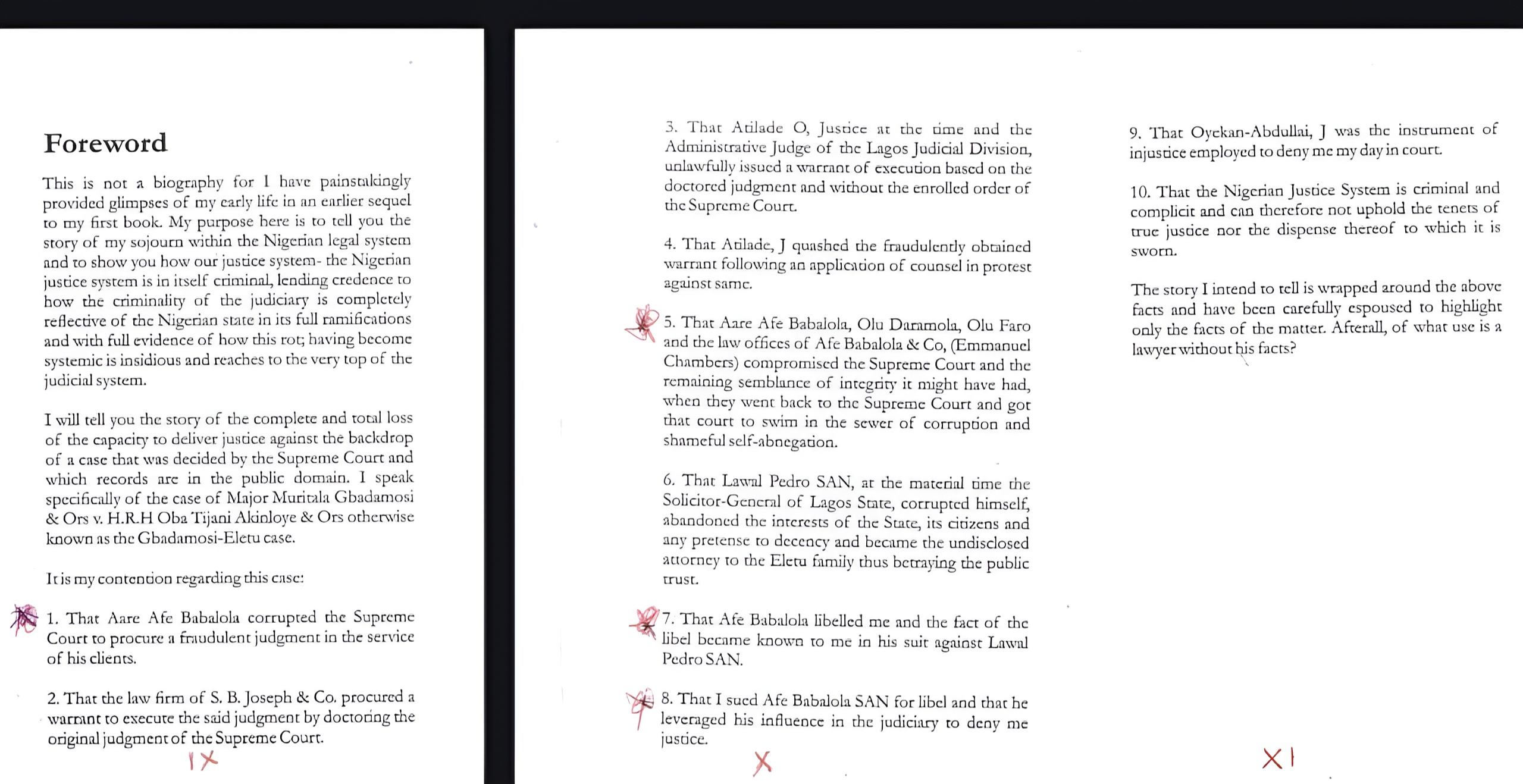
The situation raises concerns about Babalola’s influence in Ekiti State, where he owns a university and has significant connections. Critics argue that defamation is a civil matter, not a criminal offense in this case, especially in Lagos State where laws differ, and Babalola’s actions contradict his public image as a human rights advocate.

Reactions to the incident vary, with some supporting Babalola’s actions and others condemning the use of police force. The incident highlights tensions between Nigeria’s wealthy elite and human rights activists.
Dele Farotimi is a multifaceted individual – a lawyer, author, and activist who’s passionate about bringing about change in Nigeria. Born in Ibadan in April 1968, he studied at Lagos State University (LASU), where he served as President of the Student Union from 1994 to 1995. This leadership role sparked his desire for social change, which has driven his work ever since.
After being called to the Nigerian bar in 1999, Dele practiced law for nearly two decades, eventually establishing his own full-service law firm, DF Legal. He retired from active legal practice in 2018, at the age of 50, to focus on his advocacy work.
As an author, Dele has written several books, including “Do Not Die In Their War” and “Imperatives of the Nigerian Revolution“. These works offer insightful critiques of Nigeria’s political and social systems, while also proposing solutions for positive change. His writing is characterized by its thought-provoking and often provocative nature.
Dele’s activism extends beyond his writing. He’s a member of the Citizens’ Rally Against Oppression (RAMINBA) and regularly speaks out on issues affecting Nigeria. His commitment to creating a better Nigeria is evident in his work, which emphasizes the need for accountability, transparency, equity, and justice in governance.
The case of Dele Farotimi’s abduction by Ekiti State police raises concerns about jurisdiction, due process and press freedom. Here’s a neutral analysis:
Legal Framework
1. Defamation laws: Nigeria’s Defamation Act (1961) and Criminal Code Act (1990) govern defamation.
2. Jurisdiction: Lagos State High Court has jurisdiction over cases originating within Lagos.
3. Federalism: Ekiti State police may have limited authority outside their jurisdiction.
Possible Reasons for Ekiti State Police Involvement
1. Complaint by Afe Babalola: Afe Babalola, a prominent Ekiti State resident, may have filed a complaint with Ekiti State authorities.
2. Alleged crimes committed outside Lagos: Ekiti State police might claim Dele Farotimi’s book affected Afe Babalola’s reputation in Ekiti.
3. Inter-state cooperation: Lagos State police might have collaborated with Ekiti State police.
Concerns and Implications
1. Due process: Dele Farotimi’s abduction raises concerns about disregard for due process and jurisdictional boundaries.
2. Press freedom: The incident may chill free speech and journalistic inquiry.
3. Federalism: Ekiti State police’s actions may test inter-state jurisdictional limits.
4. Rule of law: The case highlights potential weaknesses in Nigeria’s judicial system.
Next Steps
1. Legal challenge: Dele Farotimi’s lawyers may contest the abduction and jurisdiction.
2. Investigation: Authorities should investigate the circumstances surrounding the abduction.
3. Judicial review: Courts should clarify jurisdictional boundaries and protect press freedom.
A precise summary. This incident exemplifies:
Intimidation Tactics
1. Abuse of power
2. Misuse of state apparatus
3. Targeting free speech
4. Silencing criticism
Elite Capture
1. Influential individuals exploiting state resources
2. Undermining democratic institutions3. Protecting personal interests
Author’s Prescience
1. Dele Farotimi anticipated backlash
2. His book’s themes: corruption, power dynamics
3. Experiencing firsthand the phenomena he critiqued*
Broader Implications
1. Chilling effect on free speech
2. Erosion of trust in institutions
3. Threats to journalistic independence
4. Reinforcing impunity for those in power.
International Relevance
1. Parallel cases worldwide (e.g., Maria Ressa, Jamal Khashoggi)
2. Global concerns: press freedom, authoritarianism
3. Human rights organizations’ attention
Necessary Actions
1. Support for Dele Farotimi
2. Condemnation of intimidation tactics
3. Investigations into abuse of power
4. Strengthening Nigeria’s democratic institutions
5. Protecting press freedom and free speech
Sources:
1. Amnesty International
2. Committee to Protect Journalists (CPJ)
3. Human Rights Watch
4. Premium Times
5. The Nation
This case highlights the need for vigilance in protecting democratic values and press freedom.
 An Investment in Education