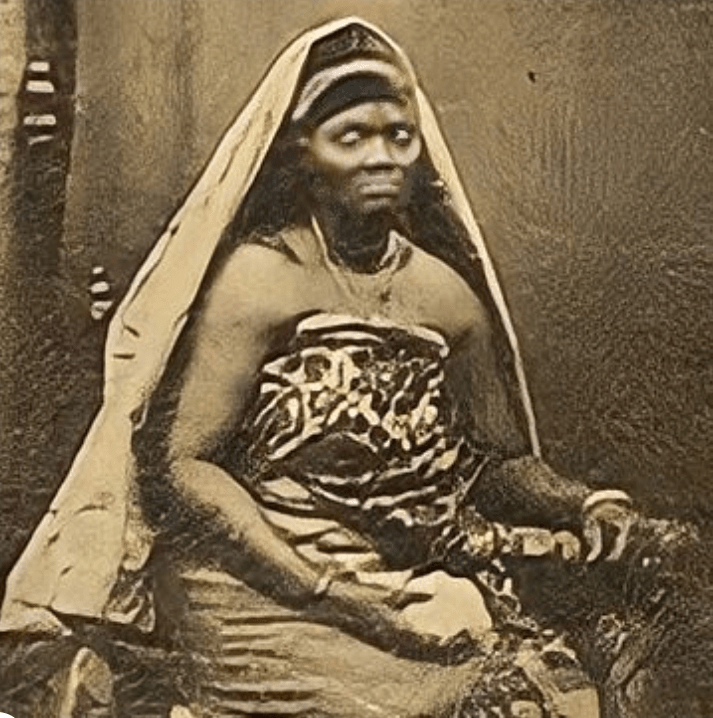
Madam Tinubu was a prominent slave dealer in Lagos, Nigeria during the 19th century. Born around 1810 in Abeokuta, she was sold into slavery at a young age and eventually gained her freedom through marriage to a wealthy merchant.
Madam Tinubu became a powerful figure in Lagos society and established herself as a major player in the slave trade. She owned several, she was originally named Efunporoye Osuntinubu, but gained the nickname “Madam Tinubu” due to her business acumen and success in the slave trade. She became a wealthy trader and political figure in the city of Lagos, where she had significant influence over the Obas (kings) of Lagos.
Madam Tinubu was known for her involvement in the transatlantic slave trade, which involved capturing and transporting individuals from West Africa to the Americas as slaves. She operated out of the coastal town of Badagry, which was a major hub for the slave trade in West Africa. Along with other dealers in the region, she would capture individuals from surrounding areas – often through violence and war – and transport them to Badagry to be sold to European buyers.
Madam Tinubu was also involved in other areas of trade, including palm oil and textiles, and was a fiercely independent and influential figure in Lagos society. However, her wealth and success were ultimately tied to the exploitation of human beings as commodities.
Today, there are efforts to preserve and commemorate the history of the transatlantic slave trade in Lagos and other parts of West Africa, as well as to acknowledge the ongoing legacy of slavery and its impact on African and African diaspora communities.
The Triangular Slave Trade
The triangular slave trade is a historic and complex trade network that spanned from the 16th Century to the 19th Century. It involved the transatlantic trade of African slaves to the Americas, Europe, and the Middle East in exchange for commodities such as sugar, tobacco, and rum.
The triangular slave trade involved three key regions: Europe, Africa, and the Americas. European traders,forced transportation of African slaves to the Americas, Europe, and other regions of the world in exchange for goods, such as guns and textiles.
The triangular slave trade got its name from the three legs of the trade route. The first leg entailed European traders sailing from Europe to Africa with goods such as guns, cloth, and beads. These goods were then exchanged for slaves, ivory, gold, and other precious resources. The second leg involved the transportation of captured slaves from Africa to the Americas, where they were sold and traded as labor for crops such as cotton, sugar, and tobacco. The final leg was the return journey to Europe with goods like sugar, molasses, and tobacco.
The triangular slave trade was most prevalent in the 16th to the 18th centuries and involved around 12.5 million African slaves, with an estimated 1.8 million dying during the middle passage, the journey from Africa to the Americas. This barbaric trade was fueled by the greed of European merchants who saw African slaves as a source of free labor and a means of amassing wealth.
The triangular slave trade had a profound and lasting impact on the African continent, with major demographic changes occurring and distant countries being interlinked. It stripped Africa of many young and able-bodied men and women, resulting in a significant loss of human resources, leaving the continent vulnerable to economic stagnation.
In summary, the triangular slave trade was a dark period in human history, which involved the forced transportation of slaves from Africa to the Americas and Europe. The trade was both economically fruitful and inhuman, causing untold suffering and death for millions of people. It is important that we learn about and remember this dark history as a way of acknowledging our past and protecting our future.
 An Investment in Education